As you may have learned, I will be leaving Suffield Country Club at the end of the month. I am taking a new position at Pine Orchard Yacht and Country Club in Branford, CT, and while I am very excited about the new position and the opportunities it offers, I am very sad to leave a club that has allowed me to grow, both personally and professionally.
When I came to Suffield four years ago, I was very eager to become a head superintendent and lead a maintenance department. I had worked extremely hard as an assistant to develop the skills necessary to grow healthy turf and produce superior playing conditions, and yet I was not prepared for how difficult it would be to develop into an effective superintendent. The learning curve that first year was very steep, and I am proud of the lessons learned and the progress we made on the golf course, especially over the last few years.
None of this would have been possible without the support, and patience, of the membership. I hate to think about some of the mistakes I made that first year, but it would be worse if I allowed myself to forget them. The thing I will always remember is that you never lost faith that we were working hard in the best interest of the golf course, and ultimately the membership.
As I spent more time on the golf course, I began to recognize and appreciate some of the things that the members have come to love about their golf course. The subtle features and the unique challenges that are found throughout this quaint little golf course grow on you with every round played. Even more than this, it was the people that I encountered on my countless trips around the course, and how much they appreciated the work we do that has made my time here special.
When the course was in good shape, you always let us know that we were doing a good job. When things were a bit more difficult you went out of your way to tell us that you recognized how hard we were working, and that our hard work and dedication were appreciated. Even when we had to “ruin” the greens “just as they were getting good” people were patient and understanding. For this I thank you, and hope you understand just how much it has meant to me and the guys on the crew.
I am proud of the work we have done, and the progress we have made. Throughout the process your passion for the golf course, and investment in the recent projects have inspired me to work harder and look for every opportunity to improve the course and its condition. I hope you feel that I am leaving the course in better shape than I found it. I regret that I will not be able to complete my vision of restoring some of the features that make this property so unique, but it is time for me to move on to new challenges.
As I prepare to take the next step in my professional development I find myself looking back at all the lessons learned along the way; developing management programs for the golf course, trying to provide a positive return on every dollar invested in the operation, and communicating what we do and why (especially when we want to take down a tree). The greatest lesson I have learned, especially over the last two years, is that everything we do is about the golfer, not the golf course. I have tried to be mindful of this when scheduling and completing our aerations, or when making decisions about accessibility of the course and how we perform our day to day maintenance. While it is obvious that without golfers there is no golf course, it took me a while to realize that a great golf course is made up of the people that play it, not the grass they play on. This is perhaps the most valuable lesson a golf course superintendent can learn, and I thank you all from the bottom of my heart.
I wish you all the best, and want you to know that I am a better person and superintendent for having been part of Suffield Country Club.
Monday, February 21, 2011


Sunday, February 13, 2011
Wish I was there...
I am watching the final round of the AT&T at Pebble Beach and can almost feel the warm sun on my face. What a beautiful property.
It reminds me of the first time I played Fisher's Island. It was so breathtaking I wanted to put my clubs back in the car and just study the golf course and how it blends into the landscape (and I wasn't playing too poorly at the time).
What are your favorite golf courses to play for the aesthetics and vistas? Drop a note in the comments section, and forward a link on to your friends. I imagine there are a lot of people that would enjoy thinking about their favorite golf course for a few moments.
It won't be long now. Seven weeks ago was Chrismas. Seven weeks from now is The Masters.
It reminds me of the first time I played Fisher's Island. It was so breathtaking I wanted to put my clubs back in the car and just study the golf course and how it blends into the landscape (and I wasn't playing too poorly at the time).
What are your favorite golf courses to play for the aesthetics and vistas? Drop a note in the comments section, and forward a link on to your friends. I imagine there are a lot of people that would enjoy thinking about their favorite golf course for a few moments.
It won't be long now. Seven weeks ago was Chrismas. Seven weeks from now is The Masters.
Sent from my iPhone
Friday, February 11, 2011
What is Going on Under the Snow?
This is an update form the USGA addressing potential problems related to the snow this winter.
With temperatures headed toward the 50's next week things might start to get interesting.
http://www.usga.org/course_care/regional_updates/regional_reports/midatlantic/What-Is-Under-All-That-Snow-And-Ice----February-2011/
http://www.usga.org/course_care/regional_updates/regional_reports/midatlantic/What-Is-Under-All-That-Snow-And-Ice----February-2011/
Monday, February 7, 2011
Testing mobile upload

Thankfully the warm weather has melted some of the snow and it looks like the next big storm is going to miss us.
Thanks for checking in.
Tuesday, January 25, 2011
Found on a Superintendents web board...
Top Ten Caddy Remarks...
#10 Golfer: "Think I'm going to drown myself in the lake."
Caddy: "Think you can keep your head down that long?"
#9 Golfer: "I'd move heaven and earth to break 100 on this course."
Caddy: "Try heaven, you've already moved most of the earth."
#8 Golfer: "Do you think my game is improving?"
Caddy: "Yes sir, you miss the ball much closer now."
#7 Golfer: "Do you think I can get there with a 5 iron?"
Caddy: "Eventually."
#6 Golfer: "You've got to be the worst caddy in the world."
Caddy: "I don't think so sir. That would be too much of a coincidence."
#5 Golfer: "Please stop checking your watch all the time. It's too muchof a distraction."
Caddy: "It's not a watch - it's a compass."
#4 Golfer: "How do you like my game?"
Caddy: "Very good sir, but personally, I prefer golf."
#3 Golfer: "Do you think it's a sin to play on Sunday?
Caddy: "The way you play, sir, it's a sin on any day."
#2 Golfer: "This is the worst course I've ever played on."
Caddy: "This isn't the golf course. We left that an hour ago."
and the #1 best caddy comment:
Golfer: "That can't be my ball, it's too old."
Caddy: "It's been a long time since we teed off, sir."
I think I may know some of these golfers.
#10 Golfer: "Think I'm going to drown myself in the lake."
Caddy: "Think you can keep your head down that long?"
#9 Golfer: "I'd move heaven and earth to break 100 on this course."
Caddy: "Try heaven, you've already moved most of the earth."
#8 Golfer: "Do you think my game is improving?"
Caddy: "Yes sir, you miss the ball much closer now."
#7 Golfer: "Do you think I can get there with a 5 iron?"
Caddy: "Eventually."
#6 Golfer: "You've got to be the worst caddy in the world."
Caddy: "I don't think so sir. That would be too much of a coincidence."
#5 Golfer: "Please stop checking your watch all the time. It's too muchof a distraction."
Caddy: "It's not a watch - it's a compass."
#4 Golfer: "How do you like my game?"
Caddy: "Very good sir, but personally, I prefer golf."
#3 Golfer: "Do you think it's a sin to play on Sunday?
Caddy: "The way you play, sir, it's a sin on any day."
#2 Golfer: "This is the worst course I've ever played on."
Caddy: "This isn't the golf course. We left that an hour ago."
and the #1 best caddy comment:
Golfer: "That can't be my ball, it's too old."
Caddy: "It's been a long time since we teed off, sir."
I think I may know some of these golfers.
Tuesday, January 4, 2011
Resolutions for 2011
Every fall members inquire about what our plans are for the winter, and every year there are a few people that are surprised when I tell them that we cut back to 40 hours a week. Most people have no idea what goes on behind the scenes during the season, let alone when the course is buried beneath a blanket of snow.
The guys have begun working on the seasonal maintenance that preserves the value of our equipment fleet. Without a dedicated mechanic on staff we have a hard time keeping up with repairs and maintenance during the season, so we take a little extra time changing fluids and filters, cleaning and painting, and making sure the fleet is reliable throughtout the year.
I have been in the office wrapping up budgets and organizing thoughts from the 2010 season. I am beginning to develop programs and goals for the 2011 season. Over the last few years I have looked at hundreds of potential projects, some realistic and manageable, others a bit beyond our means. This collection of ideas, images, and daydreams has evolved into a vision for the entire golf course.
Generally I see a golf course that reflects the character of the community. At first glance a quaint simplicity permeates the rolling hills that extend beyond the golf course and into the village and farms that comprise the quiet New England town. Just like the entrance of the club, visitors could drive right through and miss the subtle character unless they knew where to look. After a few visits the simplicity wears off and the character becomes more noticeable. Over time it becomes evident that the golf course, much like the surrounding area, is really a hidden gem to be appreciated and cherished.
Inevitably progress becomes history. Slow, subtle changes are ignored and easily forgotten. Eventually the orignal becomes unrecognizeable to those who have witnessed and participated in the evolution. This is as true of the small developments that pop up over tim e and convert farmland into suburbia as it is of the trees and bunkers that have been added over time to "improve" the character of the golf course. Although these improvements are sold as progress, the long term affect rarely reflects the original vision, especially when they are implemented in a piecemeal fashion.
As I continue to review old photographs and study the property I am amazed by the strategy and challenge that have fallen victim to tree plantings and poorly designed bunkers. This winter I intend to develop a list of examples of the character that has been lost over time. I will highlight the hollows that the original architect found so valuable he repeated them throughout the course, and reveal the lost vistas of distant hills concealed behind spruces and pines planted to frame the signature hole. Eventually the individual examples will become themes used to develop a hole-by-hole list of projects to be completed over time.
 I encourage anyone who is a student of the game, is passionate about our course, or may have witnessed the tranformation to share their opinions, ideas, stories, and pictures with members of the grounds committee. We will use any and all information as we work to develop a realistic, sustainable strategy to preserve the value of the club, and restore its status in the community.
The guys have begun working on the seasonal maintenance that preserves the value of our equipment fleet. Without a dedicated mechanic on staff we have a hard time keeping up with repairs and maintenance during the season, so we take a little extra time changing fluids and filters, cleaning and painting, and making sure the fleet is reliable throughtout the year.
I have been in the office wrapping up budgets and organizing thoughts from the 2010 season. I am beginning to develop programs and goals for the 2011 season. Over the last few years I have looked at hundreds of potential projects, some realistic and manageable, others a bit beyond our means. This collection of ideas, images, and daydreams has evolved into a vision for the entire golf course.
Generally I see a golf course that reflects the character of the community. At first glance a quaint simplicity permeates the rolling hills that extend beyond the golf course and into the village and farms that comprise the quiet New England town. Just like the entrance of the club, visitors could drive right through and miss the subtle character unless they knew where to look. After a few visits the simplicity wears off and the character becomes more noticeable. Over time it becomes evident that the golf course, much like the surrounding area, is really a hidden gem to be appreciated and cherished.
Inevitably progress becomes history. Slow, subtle changes are ignored and easily forgotten. Eventually the orignal becomes unrecognizeable to those who have witnessed and participated in the evolution. This is as true of the small developments that pop up over tim
 e and convert farmland into suburbia as it is of the trees and bunkers that have been added over time to "improve" the character of the golf course. Although these improvements are sold as progress, the long term affect rarely reflects the original vision, especially when they are implemented in a piecemeal fashion.
 As I continue to review old photographs and study the property I am amazed by the strategy and challenge that have fallen victim to tree plantings and poorly designed bunkers. This winter I intend to develop a list of examples of the character that has been lost over time. I will highlight the hollows that the original architect found so valuable he repeated them throughout the course, and reveal the lost vistas of distant hills concealed behind spruces and pines planted to frame the signature hole. Eventually the individual examples will become themes used to develop a hole-by-hole list of projects to be completed over time.
 I encourage anyone who is a student of the game, is passionate about our course, or may have witnessed the tranformation to share their opinions, ideas, stories, and pictures with members of the grounds committee. We will use any and all information as we work to develop a realistic, sustainable strategy to preserve the value of the club, and restore its status in the community.
Tuesday, December 7, 2010
2010 Year in Review
Each December, as we put the finishing touches on this golf season and begin to prepare for the next, I try to reflect on what I have learned and accomplished over the last year. Last year at this time I was trying to recover from one of the most challenging seasons in my career. The relentless rains in early summer significantly reduced the number of days that members could enjoy the course, and much of the property was water logged well into the fall. By the end of the season I was so tired of working in the mud that I was hoping it would never rain again. Be careful what you wish for.
The dominant theme in golf for 2010 was the extreme weather conditions that challenged superintendents at every club, in almost every part of the country. The cold winter in the south had courses in Florida struggling to generate revenue in an already difficult economy. The dry spring created problems for many courses with limited water resources or outdated irrigation systems. Summer came with a vengeance for most regions and brought with it extreme heat and extended disease pressure. Public or private, modern construction or classic design, nearly every golf course was forced to modify their management strategies, and adjust their standards, or risk significant turf loss on critical areas of the golf course. In spite of the hard work and dedication of superintendents along the entire east coast, sometimes it just wasn’t enough. Hardly a day went by that I did not hear a new story about someone playing another course that was suffering some level of damage, and in some cases complete failure of greens. Thankfully we made it through with minimal impact on the health or playability of our greens. We did suffer some damage on a few tees and fairways, much of which I believe is related to the wet weather we endured last summer, but overall the majority of the members were pleased with condition of the course throughout the season.
Last fall the funds raised by the first bunker bash allowed us to correct many of the drainage issues that have plagued the seventh green complex for years. While the results were not perfect and require some continued adjustment, they inspired a second tournament that, in spite of a difficult economy and reduced membership, raised more money than the previous year. Initially we were hesitant to be too ambitious in fear that we would not be able to raise enough money to complete a large project and effectively resolve all the issues. Once again the core group of members stepped up and we were able to address the drainage issues in front of the 4th green.
I am pleased to report that the renovation project is complete and has already been tested by Mother Nature. We added new drains, reshaped the bottom and sides, and laid new sod. On November 30th we spread almost 20 tons of sand throughout the floor of the bunker, mostly by hand. On December 1st we received over 1.5 inches of rain during a storm that included periods of heavy rainfall and driving winds. I was pleased to discover that although there were a few spots where the sand had washed down, there was no puddle in the floor of the bunker and much of the sand remained in place. I am confident that once the sod becomes established and the surrounding work area recovers that the drainage will be more than adequate to handle the rainfall and runoff associated with most rain events.
The new features reflect the original design as well as recommendations found in the Ken Dye master plan. I am confident that the new design will provide a suitable penalty for shots that fall short of the green surface, but will offer a much better chance for recovery than the old bunker. At the very least it will make every golfer think a bit longer when they are preparing for their approach shot, which is all bunkers are supposed to do in the first place.
This was an extremely challenging project for my staff and me. The scale of the project was a bit larger than I had anticipated, and various challenges consumed much more of our time and effort than I had expected. We are already fielding questions about next year’s project, specifically about when we will start the bunker on the other side. I am not ready to start thinking about doing this over again, but I definitely take it as a compliment that people are pleased with the work we are doing.
None of this would have been possible without the inspiration of Don Goss and the Grounds Committee who planned and promoted the Bunker Bash, or the hard work of my staff. I would like to extend my special thanks to Tom Wilkerson who generously donated the use of an excavator and trailer that allowed us to work much more efficiently and create features that would not have been possible with our own equipment.
We will be spending the next few months preparing for a fresh set of challenges and building a foundation for another extremely successful year at Suffield Country Club. On behalf of the Grounds Committee and my staff I wish you a healthy, happy holiday season and look forward to seeing you all again in the spring.
The dominant theme in golf for 2010 was the extreme weather conditions that challenged superintendents at every club, in almost every part of the country. The cold winter in the south had courses in Florida struggling to generate revenue in an already difficult economy. The dry spring created problems for many courses with limited water resources or outdated irrigation systems. Summer came with a vengeance for most regions and brought with it extreme heat and extended disease pressure. Public or private, modern construction or classic design, nearly every golf course was forced to modify their management strategies, and adjust their standards, or risk significant turf loss on critical areas of the golf course. In spite of the hard work and dedication of superintendents along the entire east coast, sometimes it just wasn’t enough. Hardly a day went by that I did not hear a new story about someone playing another course that was suffering some level of damage, and in some cases complete failure of greens. Thankfully we made it through with minimal impact on the health or playability of our greens. We did suffer some damage on a few tees and fairways, much of which I believe is related to the wet weather we endured last summer, but overall the majority of the members were pleased with condition of the course throughout the season.
Last fall the funds raised by the first bunker bash allowed us to correct many of the drainage issues that have plagued the seventh green complex for years. While the results were not perfect and require some continued adjustment, they inspired a second tournament that, in spite of a difficult economy and reduced membership, raised more money than the previous year. Initially we were hesitant to be too ambitious in fear that we would not be able to raise enough money to complete a large project and effectively resolve all the issues. Once again the core group of members stepped up and we were able to address the drainage issues in front of the 4th green.
I am pleased to report that the renovation project is complete and has already been tested by Mother Nature. We added new drains, reshaped the bottom and sides, and laid new sod. On November 30th we spread almost 20 tons of sand throughout the floor of the bunker, mostly by hand. On December 1st we received over 1.5 inches of rain during a storm that included periods of heavy rainfall and driving winds. I was pleased to discover that although there were a few spots where the sand had washed down, there was no puddle in the floor of the bunker and much of the sand remained in place. I am confident that once the sod becomes established and the surrounding work area recovers that the drainage will be more than adequate to handle the rainfall and runoff associated with most rain events.
The new features reflect the original design as well as recommendations found in the Ken Dye master plan. I am confident that the new design will provide a suitable penalty for shots that fall short of the green surface, but will offer a much better chance for recovery than the old bunker. At the very least it will make every golfer think a bit longer when they are preparing for their approach shot, which is all bunkers are supposed to do in the first place.
This was an extremely challenging project for my staff and me. The scale of the project was a bit larger than I had anticipated, and various challenges consumed much more of our time and effort than I had expected. We are already fielding questions about next year’s project, specifically about when we will start the bunker on the other side. I am not ready to start thinking about doing this over again, but I definitely take it as a compliment that people are pleased with the work we are doing.
None of this would have been possible without the inspiration of Don Goss and the Grounds Committee who planned and promoted the Bunker Bash, or the hard work of my staff. I would like to extend my special thanks to Tom Wilkerson who generously donated the use of an excavator and trailer that allowed us to work much more efficiently and create features that would not have been possible with our own equipment.
We will be spending the next few months preparing for a fresh set of challenges and building a foundation for another extremely successful year at Suffield Country Club. On behalf of the Grounds Committee and my staff I wish you a healthy, happy holiday season and look forward to seeing you all again in the spring.
Tuesday, November 23, 2010
Bunker project almost complete
The renovation project on the 4th hole is almost complete. We have finished laying the sod and will be putting the finishing touches on over the next week or so. I intend to order the sand for delivery next week and hope to have the finished product ready for inspection by the end of the month. It was a long, hard process, but we are pleased with the results and are already getting some positive feedback.
The green will be closed for the rest of the year to prevent anyone from walking on the sod, and perhaps injuring themselves trying to retrieve a ball from the bunker.
I will be taking some more pictures later this week so that before and after comparisons can be made.
The green will be closed for the rest of the year to prevent anyone from walking on the sod, and perhaps injuring themselves trying to retrieve a ball from the bunker.
I will be taking some more pictures later this week so that before and after comparisons can be made.
Friday, October 15, 2010
Renovation update
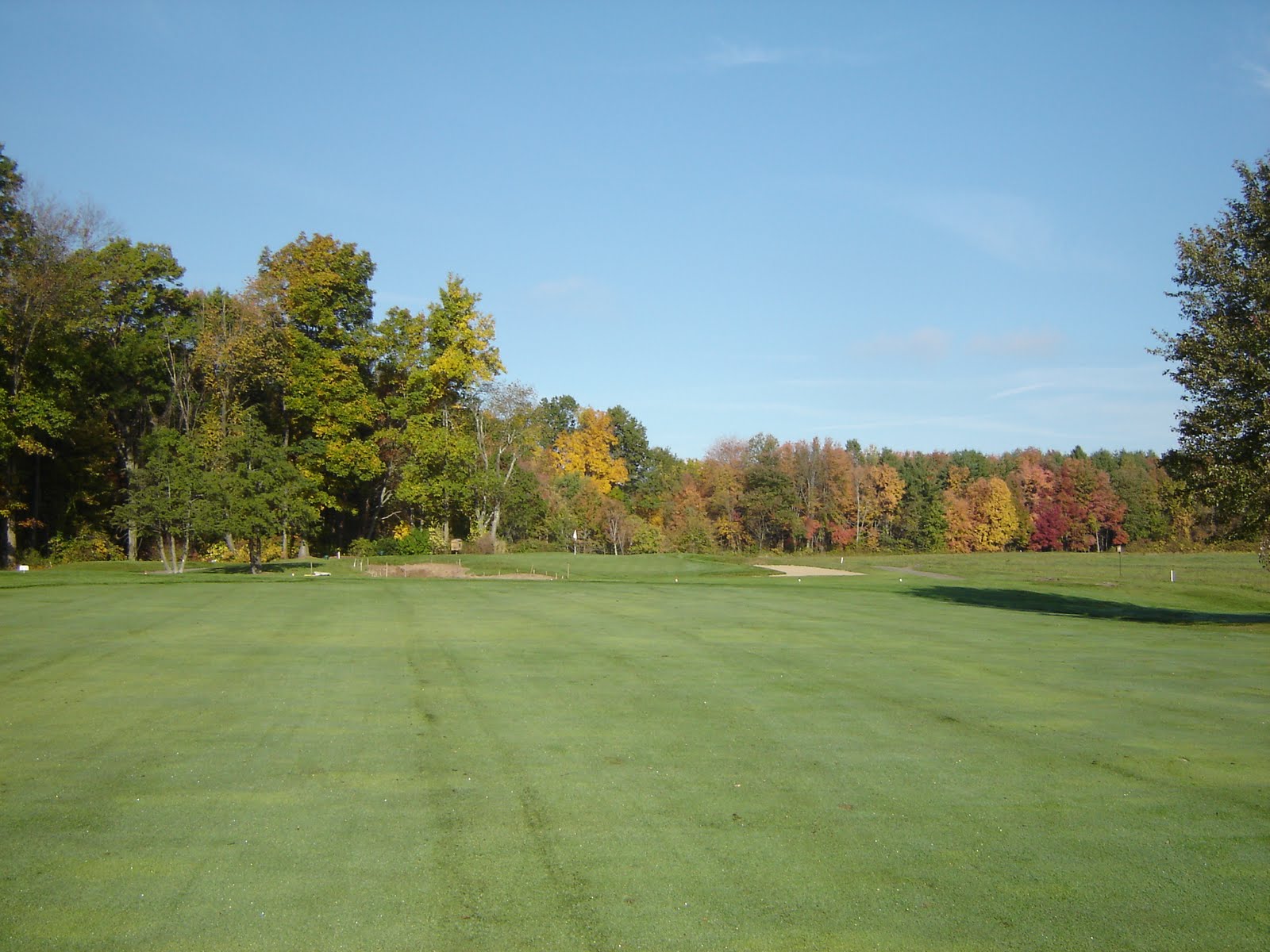
 We are making excellent progress in the bunker renovation project on the fourth hole. I thought I would share a few pictures that I had on my computer that displayed what the hole looked like before the project was initiated. I especially like the oldest picture that includes the dead maples that were removed from along the cart path. The hole looks so much better without them.
We have removed all of the sand that has been contaminated with silt and cla
 y over the years as a result of the flooding and washouts that occur every time it rains. As we cleaned the bottom of the bunker we discovered two old drain lines. The original terra cotta still worked up until it was cut by the most recent drain that was installed with the new irrigation system. The new pipe was completely filled with sand, but thankfully the water is still able to move through the stone which will prevent the hole from filling up until we can install the new drainage.

We have established a rough outline of the bunker edge and are working on shaping the floor of the bunker, which will determine exactly where the new drains will be
 installed. The new bunker will be deeper, wider, and closer to the edge of the green. This will be more challenging for some golfers, but at least you will have a fair opportunity to recover from a predicable lie. I am confident that the new design will also add interest and challenge to a fairly short hole.
Once the area has dried we will resume shaping the features and begin work on the final drainage design. I hope to have this completed by the end of next week. Once this is complete we will remove the remaining turf from the work area, reshape the features to provide adequate surface drainage, and then install the subsurface drains and catch basins. The final design will account for future renovation work and drainage from the right hand bunker, which will be completed at a later date. Once the drainage is installed and the final shaping is complete we will order the sod, hopefully by early November. I am considering a couple of different sand sources, and have not decided when I would like to add the sand. There is no rush as the bunker will remain closed until after the sod is established, which may take all winter depending on the weather.
Friday, October 1, 2010
Breaking Ground
Thankfully the heat and stress of a long, difficult summer has come to an end. This will allow us to shift our focus away from routine maintenance and move on to projects that improve the condition, appearance, and playability of the golf course. Before this season started the Grounds Committee discussed a number of issues throughout the course that they would like to see addressed. High on the list was the bunkers around the fourth green. While everyone agreed that this was perhaps the greatest opportunity to make a significant improvement, it was unlikely that we be able to fund such a project so we chose to examine smaller projects that would be less expensive but would still have a significant impact on the course. The Course Improvement Tournament in July raised far more money than we had anticipated which meant that we might be able to return to our original goal of correcting the problems on four after all. After purchasing much needed sand for the bunkers on holes one and two, I started investigating the possibility of using the remaining funds to rebuild one or both of the bunkers around the green. 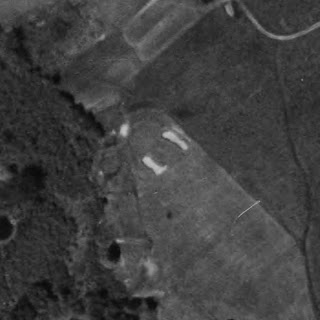
I generally use two main resources when developing a plan for this type of project. First, I use aerial photographs from 1934 to examine how the course was initially built so that I can determine how the original architect intended the holes to be played. Last year this was the key reason we decided to remove the bunkers from the seventh hole, as they were not part of the original design. The second resource I use is the Master Improvement Plan Report developed by Ken Dye. The recommendations in this report reveal opportunities to accentuate the original features while updating the course to account for modern technology. This will be the key reference used for the renovation project this fall.
Due to financial constraints, we will not be able to consult with the architect directly, nor will we be able to implement all of his suggestions. Therefore the finished product will reflect his recommendations but may not be a direct interpretation of his design. One of Mr. Dye’s guiding principals is that “deficiencies of a hole that is too short or lacking in challenge can be corrected by deepening the bunkers”. In the report he also compares the design of this green to work completed by A.W. Tillinghast at Winged Foot where flashed sand faces are used to add visual interest to the golf holes. Therefore, consistent with the recommendations outlined in the plan we will be raising the greenside face of the left bunker to improve visibility from the fairway, as well as lowering the floor slightly to add challenge to recovery from approach shots that fall short of the putting surface.
In addition to the aesthetic upgrades we will be addressing the drainage issues that have caused the deterioration of the existing bunkers. For a number of reasons the existing drain that connects the two bunkers and moves water to the woods right of the fifth tee is not effective. First the pipe does not extend the full length of the bunkers. Second, the stone trench was covered with a fabric that prevents the water from entering the pipe. After we determine the final depth of the bunker we will install new drains that cover the full extent of the bunkers as well as the faces. This should eliminate any contamination of the sand by native soil, which occurs as a result of pooling and washouts caused by heavy rainfall. These pipes will empty into a series of catch basins that will also collect surface water from the area between the fairway and green surrounds. Due to the size of our staff and available equipment, the scale of the project will be much smaller than what is outlined in the master plan and the finished product may not be as dramatic as the architect had intended. Instead, we will provide a modern interpretation of the original design that will resolve the drainage issues, enhance the challenge and visual appeal of the hole, and provide a foundation for further improvements in this area.

I generally use two main resources when developing a plan for this type of project. First, I use aerial photographs from 1934 to examine how the course was initially built so that I can determine how the original architect intended the holes to be played. Last year this was the key reason we decided to remove the bunkers from the seventh hole, as they were not part of the original design. The second resource I use is the Master Improvement Plan Report developed by Ken Dye. The recommendations in this report reveal opportunities to accentuate the original features while updating the course to account for modern technology. This will be the key reference used for the renovation project this fall.
Due to financial constraints, we will not be able to consult with the architect directly, nor will we be able to implement all of his suggestions. Therefore the finished product will reflect his recommendations but may not be a direct interpretation of his design. One of Mr. Dye’s guiding principals is that “deficiencies of a hole that is too short or lacking in challenge can be corrected by deepening the bunkers”. In the report he also compares the design of this green to work completed by A.W. Tillinghast at Winged Foot where flashed sand faces are used to add visual interest to the golf holes. Therefore, consistent with the recommendations outlined in the plan we will be raising the greenside face of the left bunker to improve visibility from the fairway, as well as lowering the floor slightly to add challenge to recovery from approach shots that fall short of the putting surface.
In addition to the aesthetic upgrades we will be addressing the drainage issues that have caused the deterioration of the existing bunkers. For a number of reasons the existing drain that connects the two bunkers and moves water to the woods right of the fifth tee is not effective. First the pipe does not extend the full length of the bunkers. Second, the stone trench was covered with a fabric that prevents the water from entering the pipe. After we determine the final depth of the bunker we will install new drains that cover the full extent of the bunkers as well as the faces. This should eliminate any contamination of the sand by native soil, which occurs as a result of pooling and washouts caused by heavy rainfall. These pipes will empty into a series of catch basins that will also collect surface water from the area between the fairway and green surrounds. Due to the size of our staff and available equipment, the scale of the project will be much smaller than what is outlined in the master plan and the finished product may not be as dramatic as the architect had intended. Instead, we will provide a modern interpretation of the original design that will resolve the drainage issues, enhance the challenge and visual appeal of the hole, and provide a foundation for further improvements in this area.
Thursday, September 9, 2010
The best is yet to come
Today has all the markings of a perfect fall golf day. The morning was clear and crisp, and the rising sun turned the hills of West Suffield a bright golden yellow. As the morning progressed some gray clouds rolled in on the breeze and golfers are reaching deep in their lockers for a pullover. For some it may be a bit brisk for golf, but in my mind this is a sign that the best golf of the year is right around the corner.
Cool, sunny days, and clear chilly nights produce ideal conditions for golf. The greens and fairways will be firm, and the grass will start to slow down providing smooth, firm playing surfaces that require very little water. Combine that with a firm wind racing out of the northwest and you have the makings for a great day of golf. The forty or so days from now until the leaves begin to fall, golf will only get better. The condition of the course will improve daily, and the leaves will slowly reveal their autumn colors, making New England the best place in then world to get out and enjoy an afternoon round.
Perhaps the only thing that could make this story any more appealing is a hearty lunch of shepherd's pie or bangers and mashed in the 19th hole, washed down with a harvest ale. This will surely warm your bones as you look out the window and contemplate your next round, when you vow to atone for the errant shots you left on the course that day.
This is what I have been thinking about all summer when we were forced to endure the relentless heat and drought, feeling more like I was working in a blast furnace rather than a golf course. There is still plenty of work to be done before the leaves start to fall, but the stress level should be much more manageable, and there will be more opportunities to steal away for a day of golf.
Cool, sunny days, and clear chilly nights produce ideal conditions for golf. The greens and fairways will be firm, and the grass will start to slow down providing smooth, firm playing surfaces that require very little water. Combine that with a firm wind racing out of the northwest and you have the makings for a great day of golf. The forty or so days from now until the leaves begin to fall, golf will only get better. The condition of the course will improve daily, and the leaves will slowly reveal their autumn colors, making New England the best place in then world to get out and enjoy an afternoon round.
Perhaps the only thing that could make this story any more appealing is a hearty lunch of shepherd's pie or bangers and mashed in the 19th hole, washed down with a harvest ale. This will surely warm your bones as you look out the window and contemplate your next round, when you vow to atone for the errant shots you left on the course that day.
This is what I have been thinking about all summer when we were forced to endure the relentless heat and drought, feeling more like I was working in a blast furnace rather than a golf course. There is still plenty of work to be done before the leaves start to fall, but the stress level should be much more manageable, and there will be more opportunities to steal away for a day of golf.
Tuesday, August 24, 2010
Timing is everything!
The greens aeration has not been going as smoothly as I had hoped. Wouldn't you know it, during one of the driest summers on record, the day before I aerify the greens we almost 2" of rain, with more forecast for the first half of the week. Thankfully the weather men got it wrong again, but that is little comfort considering the problems we have been encountering.
There have been two main problems with the aeration thus far. First, the rain on Sunday soaked my topdressing pile and added just enough moisture to the greens to make it very difficult to clean up the cores following the aeration. Thankfully the rain that was forecast for Monday and Tuesday never arrived and we were able to get the holes punched, the cores cleaned up, and the greens top dressed. Unfortunately it has been a challenge to get the holes filled as the sand is very difficult to move across the surface and into the holes unless it is perfectly dry. Eventually we will get the holes filled in and before long they will be smooth and firm and ready for fall golf.
The second issue that we have faced is the equipment that we rely on to complete the process. Last week we took the aerifier out to make sure it was running properly. It was not. In fact it blew a gear and was leaking oil. After some not so quick repairs we had the machine running again, but the spacing cable was not working. We examined the situation and realized that an adjustment we had made last winter rendered the spacing cable useless and we would have to adjust the hole spacing with the foot pedal. Never again. Most of the greens turned out fairly well, but after a routine breakdown, the machine did not operate as smoothly. The last few greens that were aerified suffered some damage due to improper hole spacing. Instead of creating nice round holes, the machine tore the turf leaving oblong holes that are very difficult to fill. The worst greens are 3, 8 and the practice green. It will take some extra attention and a lot of TLC, but I am confident that in time we will not be able to tell the difference.
The holes that were top dressed on Monday (1, 2, 6, 9) received a heavy layer of damp sand that was very slow to dry. The forecast for that night was for scattered showers which forced me to brush the greens a bit too early. The sand at the surface seemed dry enough to work, but the soil was moist enough to prevent the topdressing from pouring into the holes. The sand bridged across the holes and now, it will be very difficult to get them filled. We will continue working on this until we are confident that the sand has filled the holes and not just covered them.
The remaining holes have been filling nicely, but it is very difficult to get the sand in between the holes to move which makes the rest of the process very challenging. We will continue to brush and verticut the greens until the holes are filled, which works best with bright sun and dry winds. Thankfully they should arrive later in the week. I will be applying a variety of fertilizers tomorrow that will speed up the recovery, and I hope to have the greens mowed sometime over the weekend. If all goes well, and I have no reason to believe it will, the greens should make significant progress over the next week to ten days and be ready for the Labor Day weekend.
I apologize for the inconvenience, but I assure you that no one at Suffield C.C. is more frustrated with this process right now than I am, and I promise that we will do everything in our power to get the greens back in pristine condition as soon as possible.
There have been two main problems with the aeration thus far. First, the rain on Sunday soaked my topdressing pile and added just enough moisture to the greens to make it very difficult to clean up the cores following the aeration. Thankfully the rain that was forecast for Monday and Tuesday never arrived and we were able to get the holes punched, the cores cleaned up, and the greens top dressed. Unfortunately it has been a challenge to get the holes filled as the sand is very difficult to move across the surface and into the holes unless it is perfectly dry. Eventually we will get the holes filled in and before long they will be smooth and firm and ready for fall golf.
The second issue that we have faced is the equipment that we rely on to complete the process. Last week we took the aerifier out to make sure it was running properly. It was not. In fact it blew a gear and was leaking oil. After some not so quick repairs we had the machine running again, but the spacing cable was not working. We examined the situation and realized that an adjustment we had made last winter rendered the spacing cable useless and we would have to adjust the hole spacing with the foot pedal. Never again. Most of the greens turned out fairly well, but after a routine breakdown, the machine did not operate as smoothly. The last few greens that were aerified suffered some damage due to improper hole spacing. Instead of creating nice round holes, the machine tore the turf leaving oblong holes that are very difficult to fill. The worst greens are 3, 8 and the practice green. It will take some extra attention and a lot of TLC, but I am confident that in time we will not be able to tell the difference.
The holes that were top dressed on Monday (1, 2, 6, 9) received a heavy layer of damp sand that was very slow to dry. The forecast for that night was for scattered showers which forced me to brush the greens a bit too early. The sand at the surface seemed dry enough to work, but the soil was moist enough to prevent the topdressing from pouring into the holes. The sand bridged across the holes and now, it will be very difficult to get them filled. We will continue working on this until we are confident that the sand has filled the holes and not just covered them.
The remaining holes have been filling nicely, but it is very difficult to get the sand in between the holes to move which makes the rest of the process very challenging. We will continue to brush and verticut the greens until the holes are filled, which works best with bright sun and dry winds. Thankfully they should arrive later in the week. I will be applying a variety of fertilizers tomorrow that will speed up the recovery, and I hope to have the greens mowed sometime over the weekend. If all goes well, and I have no reason to believe it will, the greens should make significant progress over the next week to ten days and be ready for the Labor Day weekend.
I apologize for the inconvenience, but I assure you that no one at Suffield C.C. is more frustrated with this process right now than I am, and I promise that we will do everything in our power to get the greens back in pristine condition as soon as possible.
Tuesday, August 17, 2010
Why ruin a good thing?
A few members have been commenting that the greens are almost good enough for us to fill them full of holes. While I can appreciate their humor I can also sense their frustration with this process. It has been a long time since we have had to “ruin” the greens, and after a very difficult summer I think we will all agree that they deserve a break. There also seems to be a bit of confusion about the process this year so I thought I would take a few minutes to outline what we will be doing and why.
We will be returning to our regular core aeration program that has been completed each spring and fall since 2007, with the exception of last year when we modified our aeration program for a variety of reasons. Last fall we chose to delay the aeration until November in an effort to maximize the value of your membership during a very wet year (for a thorough explanation of this decision visit the November 10th entry of the blog archives).
Next monday we will be aerating the greens. The process involves removing ½” by 4" cores of turf and soil from the green and filling the holes with sand topdressing. While these holes may seem "big" compared to the 3/8” tines that had been used prior to 2007, the benefits are significantly greater with the larger tines. I will remind you that we used ¾” by 7" tines last fall. Now those were “BIG" holes.
The benefits of aeration are difficult to recognize because they lie beneath the surface of the green and are only truly realized when the greens survive difficult conditions, such as the last two summers. The process involves removing cores of soil and organic matter from the top 4” of the playing surface and filling the holes with sand topdressing. In the short term this enhances the exchange of gases between the soil and atmosphere, improves the infiltration rate of water into the root zone, and encourages root growth which will support the turf next summer. Over time, the sand content of the root zone increases producing firm playing surfaces that resist compaction. The sand topdressing also builds up between the holes providing a smooth, firm putting surface for the rest of the season.
Assuming the weather and equipment cooperate we should be able to complete the process in just over one day. I will be trying a slightly different approach this year which should speed the recovery, which I expect will take approximately ten days, but I am hoping for less. I am confident they will be back in fine playing condition by Labor Day.
Let’s go back to the idea that the greens are almost good enough for us to fill them full of holes. You may wonder why we choose to ruin the greens when they are in such good shape. The warm days and cool nights that have the greens in such great shape are also ideal for recovering from aeration. By scheduling in late August we are able to maximize the benefits while minimizing the recovery time. If we chose a late fall or early spring date the recovery could take two or three times as long and the benefits would be significantly diminished.
I will leave you with a few thoughts to keep in mind with respect to the process. First, I enjoy having the greens in pristine condition as much as you do. Second, this is an extremely labor intensive process that I would gladly skip, except my reputation as a superintendent is based solely on the condition of the greens. Finally, we spend countless hours second guessing each step of the process in search of an easier, less intrusive method that still achieves our goals. Over the years we have tried different dates, fertilizers, and even methods of filling the holes. After it is all said and done, you are still left with holes, sand, and frustrated golfers.
The USGA has published an excellent article that explains the benefits of aeration, and how they are realized. For more information on the subject read “Core Aeration By The Numbers”.
We will be returning to our regular core aeration program that has been completed each spring and fall since 2007, with the exception of last year when we modified our aeration program for a variety of reasons. Last fall we chose to delay the aeration until November in an effort to maximize the value of your membership during a very wet year (for a thorough explanation of this decision visit the November 10th entry of the blog archives).
Next monday we will be aerating the greens. The process involves removing ½” by 4" cores of turf and soil from the green and filling the holes with sand topdressing. While these holes may seem "big" compared to the 3/8” tines that had been used prior to 2007, the benefits are significantly greater with the larger tines. I will remind you that we used ¾” by 7" tines last fall. Now those were “BIG" holes.
The benefits of aeration are difficult to recognize because they lie beneath the surface of the green and are only truly realized when the greens survive difficult conditions, such as the last two summers. The process involves removing cores of soil and organic matter from the top 4” of the playing surface and filling the holes with sand topdressing. In the short term this enhances the exchange of gases between the soil and atmosphere, improves the infiltration rate of water into the root zone, and encourages root growth which will support the turf next summer. Over time, the sand content of the root zone increases producing firm playing surfaces that resist compaction. The sand topdressing also builds up between the holes providing a smooth, firm putting surface for the rest of the season.
Assuming the weather and equipment cooperate we should be able to complete the process in just over one day. I will be trying a slightly different approach this year which should speed the recovery, which I expect will take approximately ten days, but I am hoping for less. I am confident they will be back in fine playing condition by Labor Day.
Let’s go back to the idea that the greens are almost good enough for us to fill them full of holes. You may wonder why we choose to ruin the greens when they are in such good shape. The warm days and cool nights that have the greens in such great shape are also ideal for recovering from aeration. By scheduling in late August we are able to maximize the benefits while minimizing the recovery time. If we chose a late fall or early spring date the recovery could take two or three times as long and the benefits would be significantly diminished.
I will leave you with a few thoughts to keep in mind with respect to the process. First, I enjoy having the greens in pristine condition as much as you do. Second, this is an extremely labor intensive process that I would gladly skip, except my reputation as a superintendent is based solely on the condition of the greens. Finally, we spend countless hours second guessing each step of the process in search of an easier, less intrusive method that still achieves our goals. Over the years we have tried different dates, fertilizers, and even methods of filling the holes. After it is all said and done, you are still left with holes, sand, and frustrated golfers.
The USGA has published an excellent article that explains the benefits of aeration, and how they are realized. For more information on the subject read “Core Aeration By The Numbers”.
Friday, July 16, 2010
USGA: Summer Survival Mode - July 2010
This is a link to a USGA update written by one of the staff agronomists from the northeast. The article offers recommendations that are consistent with our conservative approach toward producing playing conditions over the last few weeks. It seems as though most of the turf is responding nicely to our maintenance programs, and we shuld be able to refocus on firm, fast playing conditions as weather conditions allow.
USGA: Summer Survival Mode - July 2010
USGA: Summer Survival Mode - July 2010
Sunday, July 11, 2010
Riding the Heat Wave
The heat wave of the last ten days has been challenging to say the least. It has revealed the strengths and shortcomings of our cultural programs and the limitations imposed by the heavy soils found throughout the property.
The prolonged drought that provided the firm, fast conditions we have been enjoying all season has limited our ability to irrigate the fairways and rough, and much of the course is starting to burn out. The heavy soil that is found throughout the property is very difficult to re-wet once it dries out. Over the past few weeks I have been very conservative with my irrigation applications in an effort to provide firm conditions and operate in an environmentally responsible manner. Had I known we would be facing an extended stretch of 90+ degree weather I surely would have been more liberal with the water. There are a variety of issues facing the golf course that I thought I would share so that you would understand why the course looks and plays the way it does. It will also help you understand just how difficult it is to cope with these extreme conditions.
The first thing you see as you enter the club is the back tee on the second hole. The new tees on 1 and 2 were built using soil dug out of the pond on the first hole, and were capped with a layer of sand. The irrigation coverage on these tees is less than ideal with a variety of heads providing water to make sure the tee surface is covered. Under normal conditions these tees perform rather well and require slightly more attention than the original tees on the rest of the course. On Monday July 5th I was touring the course providing irrigation to areas that were showing signs of stress. When I left the course late in the afternoon these tees were in good shape. When I came in on Tuesday morning half of the back tee was black, and the turf had gone dormant. Once the extreme heat passes we will be able to determine the extent of the damage and develop a recovery plan that will include aeration, fertilizer, and a lot of TLC with a hose. I expect much of the turf to recover this fall and the rest will be top-dressed and seeded
The fairways are extremely difficult to manage during periods of extended heat and drought. The heavy soils and thick thatch layer make the turf very prone to Summer Patch, a fungus that attacks the roots of certain grass species. Chemical control of this fungus is extremely expensive so we try to manage the disease with proper fertility, effective irrigation, and cultural practices. The weakest link of this strategy is our lack of a fairway aerifier. Our fairways should be aerified 2-3 times each year based on the nature of our soils and turf species, but we are only able to complete the process once since we have to hire a contractor each year. We should see some recovery once we get some natural precipitation and the extreme heat passes.
The greens are holding up very nicely due to the management programs we have employed over the past few years. The bentgrass is thriving in the heat and has a noticeable competitive advantage over the weaker Poa annua. This is due in large part to the growth regulator we have been using. Under normal conditions the Poa annua would be regulated more than the bentgrass that dominates our putting surfaces. The addition of the extreme heat and humidity has the weaker grass on the verge of collapse while the more reliable bentgrass is performing beautifully. We will be scaling back our management programs to allow the Poa annua to survive the next few weeks until the weather allows us to resume our efforts to eradicate the weaker grass in favor of the more resilient creeping bentgrass.
Looking forward the most pressing issue is the lack of natural precipitation. As of Saturday Clay Creek no longer flows into Muddy Brook. If we do not receive natural precipitation to recharge the groundwater reserve that supplies the brook we will be forced to stop watering much of the golf course. I expect to stop watering rough this week, followed by certain areas of the fairways, and then tees. This would leave landing areas in fairways and greens as the only areas receiving irrigation. The key thing to remember as the course starts to brown out is that most of the grass is going dormant. The weaker grasses will die leaving only the more resilient turf grasses to thrive in the fall when the mild weather returns. This actually helps us in our efforts to convert our greens and fairways to creeping bentgrass which will allow us to reduce our reliance on chemicals to control insects and diseases and reduce the amount of water we must apply in the form of irrigation. The best news is that the course is playing very well, if you like firm fairways and greens, and it is much easier to play out of the rough.
We will keep you informed as we are forced to modify our management programs throughout the rest of the season. Hopefully we will get some rain and the temperatures will remain in the 80’s for a while so we can recover from the extreme weather of last two weeks. If you have any questions or concerns about the golf course please feel free to reach out to the members of the Grounds Committee and we will address them at our next meeting.
The prolonged drought that provided the firm, fast conditions we have been enjoying all season has limited our ability to irrigate the fairways and rough, and much of the course is starting to burn out. The heavy soil that is found throughout the property is very difficult to re-wet once it dries out. Over the past few weeks I have been very conservative with my irrigation applications in an effort to provide firm conditions and operate in an environmentally responsible manner. Had I known we would be facing an extended stretch of 90+ degree weather I surely would have been more liberal with the water. There are a variety of issues facing the golf course that I thought I would share so that you would understand why the course looks and plays the way it does. It will also help you understand just how difficult it is to cope with these extreme conditions.
The first thing you see as you enter the club is the back tee on the second hole. The new tees on 1 and 2 were built using soil dug out of the pond on the first hole, and were capped with a layer of sand. The irrigation coverage on these tees is less than ideal with a variety of heads providing water to make sure the tee surface is covered. Under normal conditions these tees perform rather well and require slightly more attention than the original tees on the rest of the course. On Monday July 5th I was touring the course providing irrigation to areas that were showing signs of stress. When I left the course late in the afternoon these tees were in good shape. When I came in on Tuesday morning half of the back tee was black, and the turf had gone dormant. Once the extreme heat passes we will be able to determine the extent of the damage and develop a recovery plan that will include aeration, fertilizer, and a lot of TLC with a hose. I expect much of the turf to recover this fall and the rest will be top-dressed and seeded
The fairways are extremely difficult to manage during periods of extended heat and drought. The heavy soils and thick thatch layer make the turf very prone to Summer Patch, a fungus that attacks the roots of certain grass species. Chemical control of this fungus is extremely expensive so we try to manage the disease with proper fertility, effective irrigation, and cultural practices. The weakest link of this strategy is our lack of a fairway aerifier. Our fairways should be aerified 2-3 times each year based on the nature of our soils and turf species, but we are only able to complete the process once since we have to hire a contractor each year. We should see some recovery once we get some natural precipitation and the extreme heat passes.
The greens are holding up very nicely due to the management programs we have employed over the past few years. The bentgrass is thriving in the heat and has a noticeable competitive advantage over the weaker Poa annua. This is due in large part to the growth regulator we have been using. Under normal conditions the Poa annua would be regulated more than the bentgrass that dominates our putting surfaces. The addition of the extreme heat and humidity has the weaker grass on the verge of collapse while the more reliable bentgrass is performing beautifully. We will be scaling back our management programs to allow the Poa annua to survive the next few weeks until the weather allows us to resume our efforts to eradicate the weaker grass in favor of the more resilient creeping bentgrass.
Looking forward the most pressing issue is the lack of natural precipitation. As of Saturday Clay Creek no longer flows into Muddy Brook. If we do not receive natural precipitation to recharge the groundwater reserve that supplies the brook we will be forced to stop watering much of the golf course. I expect to stop watering rough this week, followed by certain areas of the fairways, and then tees. This would leave landing areas in fairways and greens as the only areas receiving irrigation. The key thing to remember as the course starts to brown out is that most of the grass is going dormant. The weaker grasses will die leaving only the more resilient turf grasses to thrive in the fall when the mild weather returns. This actually helps us in our efforts to convert our greens and fairways to creeping bentgrass which will allow us to reduce our reliance on chemicals to control insects and diseases and reduce the amount of water we must apply in the form of irrigation. The best news is that the course is playing very well, if you like firm fairways and greens, and it is much easier to play out of the rough.
We will keep you informed as we are forced to modify our management programs throughout the rest of the season. Hopefully we will get some rain and the temperatures will remain in the 80’s for a while so we can recover from the extreme weather of last two weeks. If you have any questions or concerns about the golf course please feel free to reach out to the members of the Grounds Committee and we will address them at our next meeting.
Monday, June 28, 2010
What a difference a year makes...
As we head into the dog days of summer I thought it would be a good time to share a few thoughts and ideas about the golf course this year. We have been receiving many comments about the condition of the golf course from members and guests, most saying that the golf course is in the best condition in years. My experience at Suffield only goes as far back as 2007, but one member has been playing the course since it opened, so I will certainly take his word for it. We appreciate all of the kind words and support, and are pleased to see so many people out enjoying the golf course this season.
I thought I would try to explain some of the things that contribute to the improved conditions we are enjoying this year as opposed to years past. The most obvious is the weather. The heavy soils and varying topography make it very difficult to maintain premium conditions during periods of heavy or persistent rain, as we learned over the last two years. This year has been warm and dry right from the start. The golf course has been firm and dry most of the year, which makes the game much more interesting, especially around the greens.
One of the keys to the good conditions that people may not realize is the replacement of the rough mower. The old unit was worn out and undersized for our application. The decks cut unevenly and scalped, and the motor was not powerful enough to handle the thick rough we have in wet areas during the early part of the season. The “new” machine is more powerful and versatile which enables it to maintain power in thick rough or when mowing steep slopes. The result is a healthy, uniform stand of turf throughout the golf course. The key difference is the amount of time we save on repairs and maintenance. At the end of last season we could not keep the old machine running for more than five or six hours at a time without something breaking or needing adjustment. The new machine requires very little maintenance at this point, which allows us to complete other tasks more efficiently.
The greens have been in great shape most of the year. This is the result of a number of programs that we are constantly tweaking. Our aeration programs over the last three years have produced healthy turf that has held up during some periods of extreme heat and humidity early this month. The surfaces are firm yet receptive, and very smooth and true. There will always be a small, and sometimes vocal portion of the membership that would like to see the greens a “little bit faster”, but I feel that the speed has been consistent and appropriate considering the undulations in the greens and the skill level of the average member.
One final contributor to the condition of the golf course is the amount of work that has been completed behind the scenes and under ground. Over the past few years the maintenance staff has been working very hard to repair and expand drainage, improve growing environments, and complete a number of projects that improve the general appearance of the property. The majority of this work is completed in the off-season and goes unnoticed or forgotten. Some projects are very prominent such as the recent work on the seventh and eighth holes, but for every obvious change there a dozen minor changes that go unnoticed. I expect we will be talking about the tree on eight for years to come, but how many people remember what the asphalt path looked like on the sixth tee? The new design of the seventh hole comes up almost every time people play the hole, but how often do we mention the seepage that used to plague the hill on nine? All of these projects, big or small, are the result of the hard work and dedication of our staff. We have been working with a reduced crew for the past few years and have still made steady and significant progress on the golf course. This fall we hope to complete more projects funded by the “Bunker Bash” and build on the success we have enjoyed over the past few years. Your support is always appreciated and we are pleased to see so many people enjoying the golf course. I hope to have more positive new to report in a few weeks after we begin planning the projects funded by the golf tournament on July 11th.
I thought I would try to explain some of the things that contribute to the improved conditions we are enjoying this year as opposed to years past. The most obvious is the weather. The heavy soils and varying topography make it very difficult to maintain premium conditions during periods of heavy or persistent rain, as we learned over the last two years. This year has been warm and dry right from the start. The golf course has been firm and dry most of the year, which makes the game much more interesting, especially around the greens.
One of the keys to the good conditions that people may not realize is the replacement of the rough mower. The old unit was worn out and undersized for our application. The decks cut unevenly and scalped, and the motor was not powerful enough to handle the thick rough we have in wet areas during the early part of the season. The “new” machine is more powerful and versatile which enables it to maintain power in thick rough or when mowing steep slopes. The result is a healthy, uniform stand of turf throughout the golf course. The key difference is the amount of time we save on repairs and maintenance. At the end of last season we could not keep the old machine running for more than five or six hours at a time without something breaking or needing adjustment. The new machine requires very little maintenance at this point, which allows us to complete other tasks more efficiently.
The greens have been in great shape most of the year. This is the result of a number of programs that we are constantly tweaking. Our aeration programs over the last three years have produced healthy turf that has held up during some periods of extreme heat and humidity early this month. The surfaces are firm yet receptive, and very smooth and true. There will always be a small, and sometimes vocal portion of the membership that would like to see the greens a “little bit faster”, but I feel that the speed has been consistent and appropriate considering the undulations in the greens and the skill level of the average member.
One final contributor to the condition of the golf course is the amount of work that has been completed behind the scenes and under ground. Over the past few years the maintenance staff has been working very hard to repair and expand drainage, improve growing environments, and complete a number of projects that improve the general appearance of the property. The majority of this work is completed in the off-season and goes unnoticed or forgotten. Some projects are very prominent such as the recent work on the seventh and eighth holes, but for every obvious change there a dozen minor changes that go unnoticed. I expect we will be talking about the tree on eight for years to come, but how many people remember what the asphalt path looked like on the sixth tee? The new design of the seventh hole comes up almost every time people play the hole, but how often do we mention the seepage that used to plague the hill on nine? All of these projects, big or small, are the result of the hard work and dedication of our staff. We have been working with a reduced crew for the past few years and have still made steady and significant progress on the golf course. This fall we hope to complete more projects funded by the “Bunker Bash” and build on the success we have enjoyed over the past few years. Your support is always appreciated and we are pleased to see so many people enjoying the golf course. I hope to have more positive new to report in a few weeks after we begin planning the projects funded by the golf tournament on July 11th.
Sunday, May 9, 2010
A Spring to Remember
It has been a few weeks since I had time to sit down and update the blog. The weather has been extremely cooperative and the many long-time members have shared comments that the golf course has never looked so good this early in the season. The warm spring and dry weather has the greens nice and firm, and we have finally been able to catch up on some of our early season maintenance.
We charged the irrigation system early last month and found numerous heads that had heaved and broken over the winter months. Leveling and repairing the heads has consumed a large amount of our valuable labor resources, and there are a number of issues that still need to be resolved before the hot weather arrives in a few weeks.
Spring clean up was a bit of a challenge due to the early arrival of spring. The warm weather in late March and early April coaxed the grass out of its winter slumber weeks ahead of schedule and forced us to mow on a regular basis when we would normally be wrapping up our winter projects. To complicate matters a bit more, there were regular wind storms that brought down limbs and debris and forced to clean up over and over again.
Finally we have been able to refocus our attention on the drainage project on the 7th hole. The sumps behind the green have been finished, and we hope to extend the drains in the approach starting early this week. We will be installing catch basins in the middle of the fairway to collect runoff and drains extending across the approach into the rough to improve the condition of the area in front of the green. Finally we will provide surface drainage for water that used to collect in the trench left of the approach in the rough. Sod will be installed over the trenches on the left and rear of the green. The next priority will be grinding the stumps on the 4th, 7th, and 8th holes. I hope to rent a machine in the next week or so and cover the scars with sod left over from the drainage project.
Looking forward we will be discussing future projects to be funded by the “Bunker Bash” scheduled for later this season. Potential projects include installation of drains in front of the 3rd and 8th greens, purchasing a truckload of sand to repair the practice bunker and replenish the bunkers on the 1st and 2nd holes. Larger projects such as the 4th fairway and the hill on 6 remain high on the priority list but require more money and labor than we can afford at the present time. We hope to use smaller projects and improvements to inspire future investment in the large scale projects that will likely require outside contractors for planning and completion.
We have an exciting golf calendar in the next few weeks and I for one am looking forward to shifting our attention from completing projects to improving playing conditions throughout the golf course. The greens are playing nicely and the fairways are nice and firm thanks to the warm dry weather. Soon we will be able to work on improving the smoothness that will restore the speed that will have even the best putters scratching their heads.
The guys have been working extremely hard this spring, and we appreciate all the positive feedback we are receiving. Your continued support and participation will serve as our inspiration to keep improving the golf course and maintain a positive outlook for the future. If there are any issues you would like me to address in future updates, or projects you would like us to consider, please feel free to post a comment on the blog or share your thoughts with a committee member. Thanks again for your continued support, and we hope to see you on the golf course soon.
We charged the irrigation system early last month and found numerous heads that had heaved and broken over the winter months. Leveling and repairing the heads has consumed a large amount of our valuable labor resources, and there are a number of issues that still need to be resolved before the hot weather arrives in a few weeks.
Spring clean up was a bit of a challenge due to the early arrival of spring. The warm weather in late March and early April coaxed the grass out of its winter slumber weeks ahead of schedule and forced us to mow on a regular basis when we would normally be wrapping up our winter projects. To complicate matters a bit more, there were regular wind storms that brought down limbs and debris and forced to clean up over and over again.
Finally we have been able to refocus our attention on the drainage project on the 7th hole. The sumps behind the green have been finished, and we hope to extend the drains in the approach starting early this week. We will be installing catch basins in the middle of the fairway to collect runoff and drains extending across the approach into the rough to improve the condition of the area in front of the green. Finally we will provide surface drainage for water that used to collect in the trench left of the approach in the rough. Sod will be installed over the trenches on the left and rear of the green. The next priority will be grinding the stumps on the 4th, 7th, and 8th holes. I hope to rent a machine in the next week or so and cover the scars with sod left over from the drainage project.
Looking forward we will be discussing future projects to be funded by the “Bunker Bash” scheduled for later this season. Potential projects include installation of drains in front of the 3rd and 8th greens, purchasing a truckload of sand to repair the practice bunker and replenish the bunkers on the 1st and 2nd holes. Larger projects such as the 4th fairway and the hill on 6 remain high on the priority list but require more money and labor than we can afford at the present time. We hope to use smaller projects and improvements to inspire future investment in the large scale projects that will likely require outside contractors for planning and completion.
We have an exciting golf calendar in the next few weeks and I for one am looking forward to shifting our attention from completing projects to improving playing conditions throughout the golf course. The greens are playing nicely and the fairways are nice and firm thanks to the warm dry weather. Soon we will be able to work on improving the smoothness that will restore the speed that will have even the best putters scratching their heads.
The guys have been working extremely hard this spring, and we appreciate all the positive feedback we are receiving. Your continued support and participation will serve as our inspiration to keep improving the golf course and maintain a positive outlook for the future. If there are any issues you would like me to address in future updates, or projects you would like us to consider, please feel free to post a comment on the blog or share your thoughts with a committee member. Thanks again for your continued support, and we hope to see you on the golf course soon.
Saturday, April 3, 2010
Full steam ahead
The warm weather this spring has the golf course in good playing condition weeks ahead of schedule. The greens have been mowed a few times and I am receiving comments that they are in the best shape in years considering it is the first week in April. The warm weather has helped dry the golf course from over 4.5” of rain that soaked the area earlier this week. There are still a number of wet areas throughout the course, but I am definitely surprised that we are able to have carts this early in the season, and so soon after such a major storm.
The greens have been mowed a few times and are firming up nicely. Over the next few weeks we will gradually lower the cutting height of the mowers, and as the turf continues to break dormancy the playability of the greens will improve with respect to smoothness and speed. This process is determined by the temperature of the soil. The important thing to remember is that soil temperature is influenced by the overnight lows as much as the daytime highs. This means that the temperature below the surface changes very slowly this time of year. I assure you that we will be watching very closely to determine when we can be more aggressive working to improve the condition of the greens. Based on what I have seen over the last few weeks along with the lessons learned over the last few years, I expect that the greens will be in excellent condition this year.
As you get out to play your first few rounds of golf, you will find remnants of some winter projects yet to be completed. The brush in the driving range and along the 5th fairway should be cleaned up next week. We have been reluctant to rent the chipper in fear that we could not tow it around the golf course without causing extensive damage. There are a number of stumps that will be ground and filled as time allows. While they are definitely unsightly, most of them are not in play and therefore are not a top priority. I hope to have them cleaned up by the end of the month.
There are detailed explanations of our winter projects in previous blog entries. I encourage you to review them, especially “If a tree falls on a golf course…” For those that would like to stay informed you can sign up as a follower. This will allow you to post your opinion at the end of each entry, as well as be notified whenever another follower does the same. Thank you for stopping by, and we hope to see you on the golf course soon.
The greens have been mowed a few times and are firming up nicely. Over the next few weeks we will gradually lower the cutting height of the mowers, and as the turf continues to break dormancy the playability of the greens will improve with respect to smoothness and speed. This process is determined by the temperature of the soil. The important thing to remember is that soil temperature is influenced by the overnight lows as much as the daytime highs. This means that the temperature below the surface changes very slowly this time of year. I assure you that we will be watching very closely to determine when we can be more aggressive working to improve the condition of the greens. Based on what I have seen over the last few weeks along with the lessons learned over the last few years, I expect that the greens will be in excellent condition this year.
As you get out to play your first few rounds of golf, you will find remnants of some winter projects yet to be completed. The brush in the driving range and along the 5th fairway should be cleaned up next week. We have been reluctant to rent the chipper in fear that we could not tow it around the golf course without causing extensive damage. There are a number of stumps that will be ground and filled as time allows. While they are definitely unsightly, most of them are not in play and therefore are not a top priority. I hope to have them cleaned up by the end of the month.
There are detailed explanations of our winter projects in previous blog entries. I encourage you to review them, especially “If a tree falls on a golf course…” For those that would like to stay informed you can sign up as a follower. This will allow you to post your opinion at the end of each entry, as well as be notified whenever another follower does the same. Thank you for stopping by, and we hope to see you on the golf course soon.
Friday, March 19, 2010
USGA: The Best Laid Plans… - March 2010
The USGA website provides a lot of useful information regarding golf course maintenance. This is a Regional update for the northeast written by Dave Oatis, USGA agronomist. I will post these now and again when there is information that our members might find useful or intersting.
I am posting this update because it will provide information about issues other courses are experiencing in the region. Thankfully I do not expect to have many of the problems discussed in the update (except for the weather issues, I have very little influence there).
USGA: The Best Laid Plans… - March 2010
I am posting this update because it will provide information about issues other courses are experiencing in the region. Thankfully I do not expect to have many of the problems discussed in the update (except for the weather issues, I have very little influence there).
USGA: The Best Laid Plans… - March 2010
Thursday, March 18, 2010
On your mark...get set...GOLF!
Spring does not officially arrive until Saturday, but you would not know it by looking outside. The weather has been unseasonably warm over the past two weeks, and a lot of people are ready to get out and play some golf. Slowly but surely the golf course is getting ready too, and we have decided to open most of the greens for play. The 3rd green will remain closed until it dries out and we are sure all the frost has left the ground. The 7th green will be closed to protect the sod that was laid last fall.
A number of courses opened as soon as the weather turned to take advantage of the opportunity to generate some early season revenue. While they may have realized a gain in the short term, there are significant costs associated with opening greens too early. Foot traffic and ball marks on greens that are soft and not yet growing cause damage that will take months to heal. We choose to wait a bit longer until we are confident that the greens are able to receive approach shots in order to preserve the condition of the greens for the remainder of the season. The course tends to be very wet this time of year and the greens are far from their mid season condition so we have been fairly conservative about opening them. I checked my notes from the past few years, and our opening dates have been April 9th in 2007, March 29th in 2008, and March 20th last year. We will open on the 18th this year, which I feel is quite reasonable.
We have rolled the greens once with our mowers to help firm the surface and will do so again tomorrow. The greens are still very soft and it is imperative that you fix all ball marks on every green. If this request is ignored we will have to be more conservative in the future when considering opening the golf course. Areas of the golf course are still very wet from the heavy rain last weekend so I would wear an old pair of DryJoys or other waterproof shoes. There are also remnants of various projects so please be careful when you are walking around the golf course. The area surrounding the 7th green is completely closed and you should make every effort to remain outside the ropes until the frost heaves have settled and the sod has become established.
Depending on when you last played, you may find a number of changes when you first tour the golf course. The most prominent is the work completed around the 7th green. The bunker bash funded the project that removed the bunkers from in front of the green and restored mounding that we believe was part of the original design. We have installed and upgraded the drainage in this area, and will be adding more across the approach and into the fairway in the coming weeks. The green will remain closed until the sod is established enough to walk on, and we hope to have the entire area in play in early May.
The tree on the 8th hole is finally down. I am eager to hear people’s opinion of how the hole plays now relative to past years. The health of the green will certainly improve and I am confident that people will spend a little more time thinking about how they approach the tee shot. We also removed some sick trees and brush from the area. The hollow is noticeably more attractive now, and the features across the creek are much more prominent. It is our intention to continue to reveal the character that lies hidden throughout this portion of the property, and make Clay Creek the key feature of the golf course.
Other winter projects include clearing the brush from the property line starting at the top of the hill on 3, all the way down to the field on the right side of the 4th fairway. This has enhanced the character of this area as well, and will improve your chances of finding a stray tee shot that may have wandered a bit into the woods. The view of the 4th hole has been dramatically improved and you can actually see where Clay Creek enters the property. We hope that the drainage swale that runs along the cart path can be cleaned out and serve as an outlet for future drainage projects on this hole.
A number of courses opened as soon as the weather turned to take advantage of the opportunity to generate some early season revenue. While they may have realized a gain in the short term, there are significant costs associated with opening greens too early. Foot traffic and ball marks on greens that are soft and not yet growing cause damage that will take months to heal. We choose to wait a bit longer until we are confident that the greens are able to receive approach shots in order to preserve the condition of the greens for the remainder of the season. The course tends to be very wet this time of year and the greens are far from their mid season condition so we have been fairly conservative about opening them. I checked my notes from the past few years, and our opening dates have been April 9th in 2007, March 29th in 2008, and March 20th last year. We will open on the 18th this year, which I feel is quite reasonable.
We have rolled the greens once with our mowers to help firm the surface and will do so again tomorrow. The greens are still very soft and it is imperative that you fix all ball marks on every green. If this request is ignored we will have to be more conservative in the future when considering opening the golf course. Areas of the golf course are still very wet from the heavy rain last weekend so I would wear an old pair of DryJoys or other waterproof shoes. There are also remnants of various projects so please be careful when you are walking around the golf course. The area surrounding the 7th green is completely closed and you should make every effort to remain outside the ropes until the frost heaves have settled and the sod has become established.
Depending on when you last played, you may find a number of changes when you first tour the golf course. The most prominent is the work completed around the 7th green. The bunker bash funded the project that removed the bunkers from in front of the green and restored mounding that we believe was part of the original design. We have installed and upgraded the drainage in this area, and will be adding more across the approach and into the fairway in the coming weeks. The green will remain closed until the sod is established enough to walk on, and we hope to have the entire area in play in early May.
The tree on the 8th hole is finally down. I am eager to hear people’s opinion of how the hole plays now relative to past years. The health of the green will certainly improve and I am confident that people will spend a little more time thinking about how they approach the tee shot. We also removed some sick trees and brush from the area. The hollow is noticeably more attractive now, and the features across the creek are much more prominent. It is our intention to continue to reveal the character that lies hidden throughout this portion of the property, and make Clay Creek the key feature of the golf course.
Other winter projects include clearing the brush from the property line starting at the top of the hill on 3, all the way down to the field on the right side of the 4th fairway. This has enhanced the character of this area as well, and will improve your chances of finding a stray tee shot that may have wandered a bit into the woods. The view of the 4th hole has been dramatically improved and you can actually see where Clay Creek enters the property. We hope that the drainage swale that runs along the cart path can be cleaned out and serve as an outlet for future drainage projects on this hole.
We are very excited about the work completed at the club over the past six months and are looking forward to a great season. We hope to see you on the course in the coming weeks and encourage you to bring a friend and spread the word about the continued progress at Suffield Country Club.
Subscribe to:
Posts (Atom)