Showing posts with label character restoration. Show all posts

Friday, October 15, 2010

Renovation update

We are making excellent progress in the bunker renovation project on the fourth hole. I thought I would share a few pictures that I had on my computer that displayed what the hole looked like before the project was initiated. I especially like the oldest picture that includes the dead maples that were removed from along the cart path. The hole looks so much better without them.
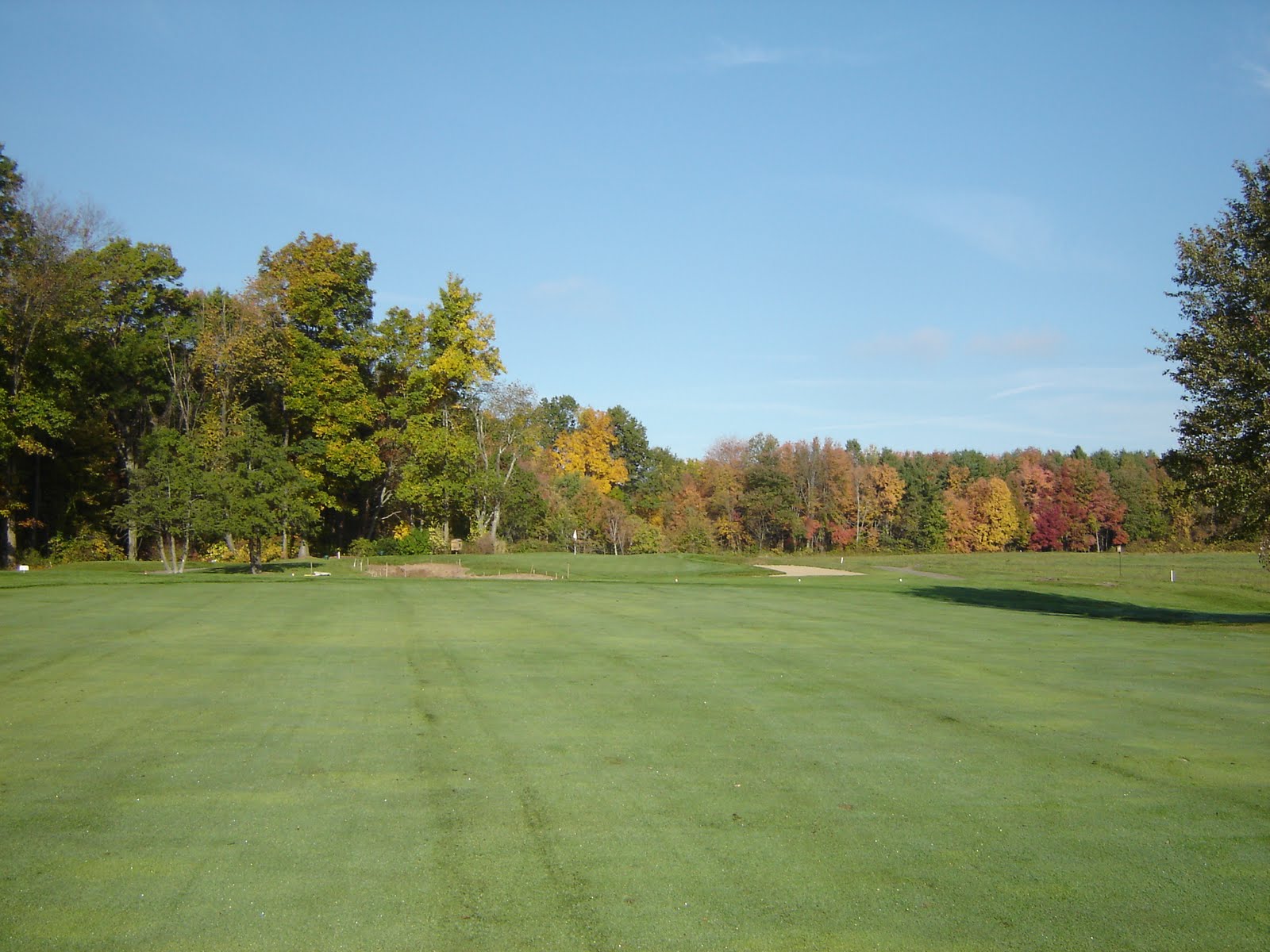

We have removed all of the sand that has been contaminated with silt and clay over the years as a result of the flooding and washouts that occur every time it rains. As we cleaned the bottom of the bunker we discovered two old drain lines. The original terra cotta still worked up until it was cut by the most recent drain that was installed with the new irrigation system. The new pipe was completely filled with sand, but thankfully the water is still able to move through the stone which will prevent the hole from filling up until we can install the new drainage.


We have established a rough outline of the bunker edge and are working on shaping the floor of the bunker, which will determine exactly where the new drains will be installed. The new bunker will be deeper, wider, and closer to the edge of the green. This will be more challenging for some golfers, but at least you will have a fair opportunity to recover from a predicable lie. I am confident that the new design will also add interest and challenge to a fairly short hole.


Once the area has dried we will resume shaping the features and begin work on the final drainage design. I hope to have this completed by the end of next week. Once this is complete we will remove the remaining turf from the work area, reshape the features to provide adequate surface drainage, and then install the subsurface drains and catch basins. The final design will account for future renovation work and drainage from the right hand bunker, which will be completed at a later date. Once the drainage is installed and the final shaping is complete we will order the sod, hopefully by early November. I am considering a couple of different sand sources, and have not decided when I would like to add the sand. There is no rush as the bunker will remain closed until after the sod is established, which may take all winter depending on the weather.

Friday, October 1, 2010

Breaking Ground

Thankfully the heat and stress of a long, difficult summer has come to an end. This will allow us to shift our focus away from routine maintenance and move on to projects that improve the condition, appearance, and playability of the golf course. Before this season started the Grounds Committee discussed a number of issues throughout the course that they would like to see addressed. High on the list was the bunkers around the fourth green. While everyone agreed that this was perhaps the greatest opportunity to make a significant improvement, it was unlikely that we be able to fund such a project so we chose to examine smaller projects that would be less expensive but would still have a significant impact on the course. The Course Improvement Tournament in July raised far more money than we had anticipated which meant that we might be able to return to our original goal of correcting the problems on four after all. After purchasing much needed sand for the bunkers on holes one and two, I started investigating the possibility of using the remaining funds to rebuild one or both of the bunkers around the green.
I generally use two main resources when developing a plan for this type of project. First, I use aerial photographs from 1934 to examine how the course was initially built so that I can determine how the original architect intended the holes to be played. Last year this was the key reason we decided to remove the bunkers from the seventh hole, as they were not part of the original design. The second resource I use is the Master Improvement Plan Report developed by Ken Dye. The recommendations in this report reveal opportunities to accentuate the original features while updating the course to account for modern technology. This will be the key reference used for the renovation project this fall.
Due to financial constraints, we will not be able to consult with the architect directly, nor will we be able to implement all of his suggestions. Therefore the finished product will reflect his recommendations but may not be a direct interpretation of his design. One of Mr. Dye’s guiding principals is that “deficiencies of a hole that is too short or lacking in challenge can be corrected by deepening the bunkers”. In the report he also compares the design of this green to work completed by A.W. Tillinghast at Winged Foot where flashed sand faces are used to add visual interest to the golf holes. Therefore, consistent with the recommendations outlined in the plan we will be raising the greenside face of the left bunker to improve visibility from the fairway, as well as lowering the floor slightly to add challenge to recovery from approach shots that fall short of the putting surface.
In addition to the aesthetic upgrades we will be addressing the drainage issues that have caused the deterioration of the existing bunkers. For a number of reasons the existing drain that connects the two bunkers and moves water to the woods right of the fifth tee is not effective. First the pipe does not extend the full length of the bunkers. Second, the stone trench was covered with a fabric that prevents the water from entering the pipe. After we determine the final depth of the bunker we will install new drains that cover the full extent of the bunkers as well as the faces. This should eliminate any contamination of the sand by native soil, which occurs as a result of pooling and washouts caused by heavy rainfall. These pipes will empty into a series of catch basins that will also collect surface water from the area between the fairway and green surrounds. Due to the size of our staff and available equipment, the scale of the project will be much smaller than what is outlined in the master plan and the finished product may not be as dramatic as the architect had intended. Instead, we will provide a modern interpretation of the original design that will resolve the drainage issues, enhance the challenge and visual appeal of the hole, and provide a foundation for further improvements in this area.

Friday, March 5, 2010

If a tree falls on a golf course...

You may have heard by now, the tree on the 8th hole is finally down. The decision to remove the tree has been fairly controversial and there have been countless discussions about the issue. It is difficult to say whether there were more voices in support of or in opposition to the decision, but it seems as though I heard from an equal number on both sides. Before the season gets under way and the conversations start anew I thought I should provide a detailed account of the process that led to the removal of the tree.
First I would like to address the issues that initiated the conversations. As a golfer, I had a strong opinion about the tree and its influence on the hole, however I am not a member of the club, and therefore this opinion carries little weight. As a superintendent I have a professional opinion on the issue based on the influence the tree had on the health and playability of the green, which should be the club’s top priority.
The key issue with the tree was its location on the southwest corner of the green. The large canopy created shade on the green for a large portion of the day, which affected the competitive advantage of desired turf grass species with a weaker one. Our greens are comprised primarily of bentgrass. This perennial grass species has excellent durability with respect to maintenance practices and extreme weather conditions. It will withstand aggressive grooming and topdressing that must be performed to provide firm, smooth playing surfaces, and is more reliable in the heat of summer and after long, cold winters. The weaker grass species, Poa annua, is less reliable under these conditions and presents numerous other challenges. Without going into too many scientific details, this grass is a winter annual. By nature this plant wants to complete its life cycle in one year. It germinates in the fall, and then produces copious amounts of seed in the spring before dying in the heat of the summer. Read that sentence again. The shade produced by the tree provides a competitive advantage that favors a grass population dominated by the weaker Poa annua. Now that the tree has been removed the green will be in full sun from dawn through the late afternoon. Over time the playing surface will become drier and the bentgrass will dominate the weaker annual Poa. Other issues that played a less significant role in the decision include root competition and the amount of leaves, sticks, and acorns that littered the front of the green throughout the season. While these issues were definitely a problem, the key issue was the affect of the shade on the health and playability of the turf.
The issue was discussed in detail the very first time I toured the course with the Pro, President, and reigning club champion. My comment was that it was the worst tree I had ever seen on a golf course. I was informed that the club had received recommendations to remove the tree from the previous superintendent as well as the architect hired to develop a master plan for the club. After working with this issue for a year it became clear that they were right. I obtained quotes from reliable tree companies in the range of $1800 to $2000 to drop the tree and chip the brush, but not remove the wood. The first winter it was too difficult to get their equipment in and out of the work area without creating significant damage to the golf course so we decided to wait. The second year we were concerned about the economy and the decision was made to avoid any unnecessary expenses. Finally, I could not stand the thought of waiting another year and decided to drop it myself. I purchased two wedges from the hardware store for a total of $17, tied a rope to the tractor (and said a quick Hail Mary), and laid the tree safely down in the hollow.
Once the tree was removed, we were able to confirm the fact that the tree was not planted until almost thirty years after the course was built, and therefore the removal is consistent with our efforts to restore the character of the golf course. After reviewing aerial photographs from the 1930’s it became clear that there were no trees near the green surface, and that golfers were challenged to hit the green or face a difficult recovery from either the left or right. I am confident that golfers will spend a little more time thinking about this shot than in the past, and that is what makes this one of the best holes on the golf course.
I was amazed by the visual impact that the removal has on the hole from the tee. The green surface looks much larger now that the key point of reference has been removed, and the bank to the left is much more intimidating. The front left hole location will be one of the best on the course, and balls heading into the hollow that were deflected by the tree will now flirt with the hazard. I am anxious to hear other people’s opinions on this affect.

I hope this has cleared up this issue and will eliminate any misinformation that might be floating around the 19th hole. If you have any other questions or comments, please feel free to contact me, or sign up as a follower and leave your comments below.


Friday, February 5, 2010

A Very Sticky Subject

A few weeks ago I was taking a tour through the clubhouse, as I often do this time of year, making sure that nothing was out of the ordinary. I usually check to see if any lights are on, or toilets are running, or thermostats need to be turned down. As usual nothing seemed out of place and I was about to return to my office when I happened to look out the window of the rear dining room. I could not help but stare at the view, or more accurately, the lack of one.
Sometime after 1957, someone decided to plant a row of spruces and white pines to create a backdrop for the 9th (then 7th) green. This was a popular trend among committees and chairpersons in the 60's and 70's, and probably coincided with the planting on the 7th (then 5th) hole.
As a superintendent, these trees have bothered me since I first arrived in 2007. The trees were planted on the east and south sides of the green, and prevent the sun from reaching the playing surface until very late in the morning. While the shade is not enough to kill the turf, it does have a significant impact on the playing surface. Anyone who plays on a regular basis will tell you that the back of the green is much softer and even wet, as opposed to the front third that recieves significantly more sunlight.
As a golfer, I felt the trees detracted from the hole in a number of ways. First, they provided a frame of reference for a shot that was meant to be partially blind, and therefore negated one of the architect's design strategies. Second, any player that did not hold the green was punished by an extremely difficult, downward chip from a very poor lie. Finally, if the approach shot was so poorly played, the trees could actually knock it down and prevent an even more difficult recovery. In a game that is based on equity, this situation makes absolutely no sense.
After we removed the trees from the 7th green and revealed the character that lies in the features and vistas it became clear that our finishing hole is not living up to its potential. Eliminating these trees will restore the architect's orignal intent and will improve the condition of the turf behind the green, and therfore chance of recovery.
Removing trees from a golf course is a very controversial subject, and there are a few other trees that I feel more strongly about, so I never really pushed the issue on this hole. Once I realized the impact the trees have on the view from the patio and the clubhouse, I felt that the issue needed to be addressed.
The leadership of the club is working extremely hard this season to maximize the value of a membership at Suffield CC, and highlight the features that will attract new members and outside business. One of the key amenities at the club is the setting, and the beautiful view of the golf course as the sun approaches the horizon on a warm summer night. These trees block approximately 40% of the horizon when viewed from the clubhouse.
I have brought this issue to the attention of the Grounds Committee and the Board for careful consideration. I mentioned in both meetings that it is easy to remove trees but very difficult to put them back, and therefore the decision must be made on the golf course. I went out today and took some pictures from various angles to support these statements. I have posted these opinions and pictures so that people could share their comments for or against removing the trees. While a picture may be worth a thousand words, it cannot compare to being there and observing this in person. I encourage you to stop by the club, walk around, and consider the impact they have on the golf course as well as the atmosphere around the clubhouse.

Tuesday, January 12, 2010

Fresh Perspective

Welcome to the new and improved Superintendent's blog for the Suffield Country Club maintenance department.
It is a new year and I am very excited about the coming season at Suffield CC. The past few years have been very rewarding for me both personally and professionally. I have been working very hard to develop programs and make improvements that will enhance the members' overall golf experience on a consistent basis. Perhaps the most successful program has been the communication program, which allos me to inform the membership regarding what we do and why. The cornerstone of this program is the Grounds page on the website, especially the Superintendent's Blog where I address course conditions, the nature and necessity of maintenance practices, and most importantly the value of your continued support.
We have been working very hard over the last few years to provide you with superior playing conditions in spite of the numerous challenges that we must overcome on an almost daily basis. I have commented before about how much it means to us when we are faced with a seemingly insurmountable challenge, or feel as though we are spinning our wheels (probably in mud), and one of you share how much you are enjoying the golf course. This never fails to lift our spirits.
People often ask me what I do over the winter. We perform our seasonal repairs and maintenance on the equipment, prune or remove trees that have become unhealthy or encroach on the golf course, as well as a variety of other tasks that we can not complete during the peak season. Perhaps the most important project for the off season is evaluation of the maintenance operation and its programs. We spend a lot of time identifying the programs that are most effective as well as researching alternatives to those that are not. Once the opportunities for improvement are identified we develop new programs that we feel will give us the best chance of achieving our long and short term goals for the golf course.
One of the most popular changes we made last year was moving our fall aeration from the end of August to early November. This decision to reschedule this process was made in July, to preserve the condition of the greens in the peak season, and to compensate for the days that were lost due to persistent rain early in the summer. By delaying the fall aeration and altering the nature of the process, we were able to correct compaction issues within the greens that are not addressed by our normal aeration program. The benefits of this process will allow us to eliminate the spring aeration for 2010. We will return to our aeration program in late summer, but it is scheduled at a time when there is normally a decrease in activity on the golf course and the conditions are optimal for growth and recovery.
While it is not reasonable to expect that we can eliminate greens aeration altogether, I feel that it is my responsibility to regularly perform an honest evaluation of the the costs and benefits associated with our maintenance programs. In the past I have placed the emphasis on maximizing the benefits from an agronomic standpoint because I have been trained that the golf course always come first. I now realize that in doing so I have underestimated one of the costs associated with providing these benefits, specifically your ability to enjoy the golf course. Therefore, I am researching all options available that will allow us to maximize the number of days that the golf course is in peak playing condition.
We are not only reflecting on the past season, but also looking forward to completing the project you funded on the seventh hole. The bunkers have been removed, mounds reshaped, and drains installed that will address many of the issues that have plagued this area for years. There is still a lot of work to do, but once completed the project will restore many of the architect's original features and will present you with new challenges on what initially appears to be a fairly easy hole.
This project has inspired us to discover other opportunities to highlight the character that is found throughout the golf course. One of the key features that we wish to highlight is Clay Creek, and the steep banks that meander along through the lower portion of the course. Through pruning and removal of trees, we have revealed the beauty and interest that the features contribute to the character of the property. The impact of these features is so valuable that the architect repeated them in other areas of the golf course such as the banks on the 2nd, 6th, and 8th greens, as well as the 9th tee. The visual effect is that the shoulders that cross the 4th hole and support the 5th fairway are more prominent and the oak trees that line them appear to be much more mature, especially when viewed from a distance. Looking forward we plan to address the drainage issues in the hollows and improve the playability and appearance of the area in hopes that the true character of the golf course is revealed.
As I look out the window of my office it is hard to imagine that a new golf season is right around the corner. Last year we opened the greens for play on March 20th which is less than ten weeks away. Over the next few weeks we will continue to evaluate our programs in an effort to maximize the value of your membership. This is where we need your help. We need to know what aspects the club have the greatest influence on your ability to enjoy your time at the club, as well as any issues that have a negative impact on your experience. Your input will allow us to focus our efforts on the conditions and services that contribute to the value of your membership, and enhance your ability to enjoy your time spent here with family and friends.
Please forward you comments and suggestions on to your board and committee members. Any comments related to the golf course or its condition can be submitted to me at superintendent@suffieldcc.com. Thank you for reading and we look forward to seeing you on the golf course in a few weeks.